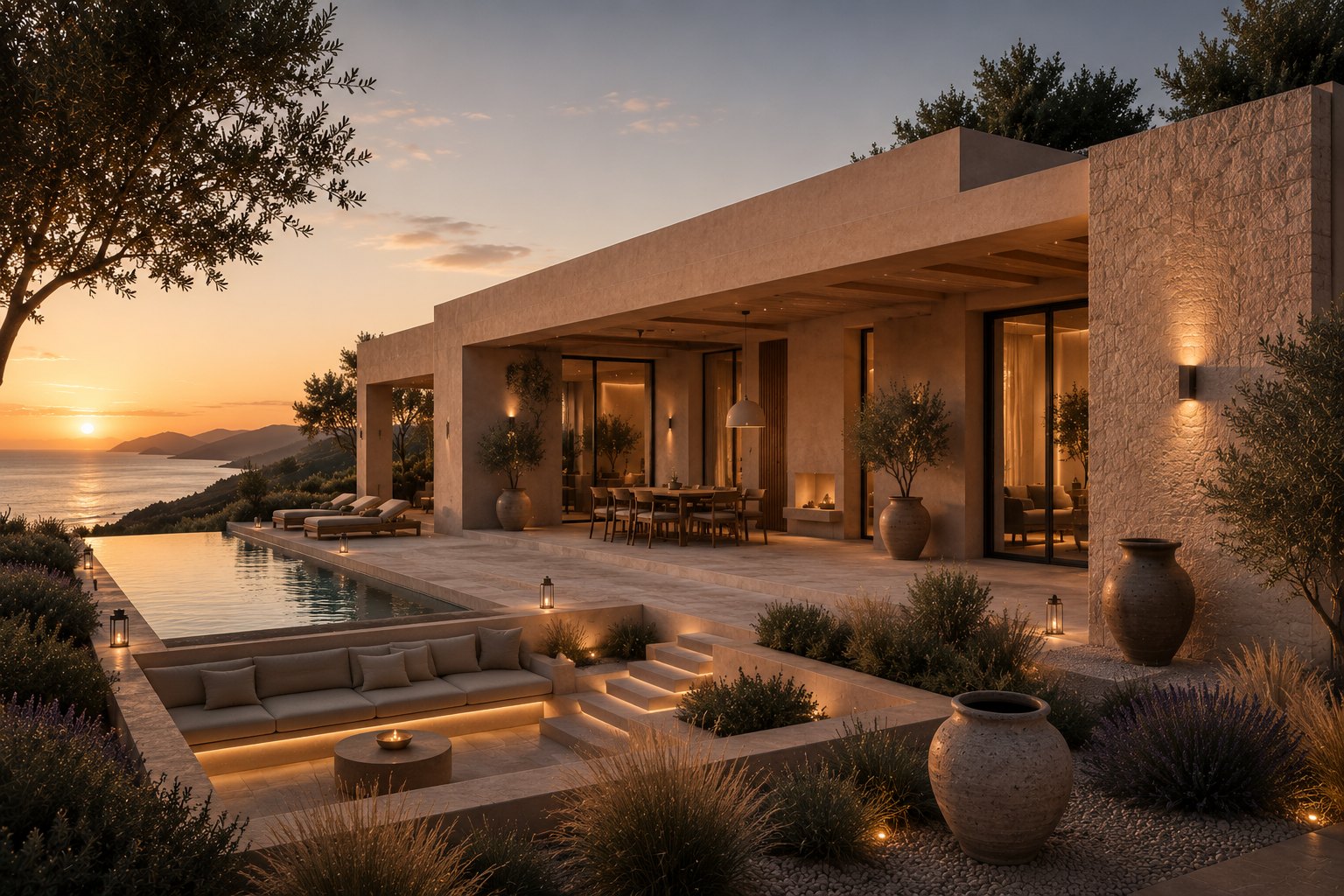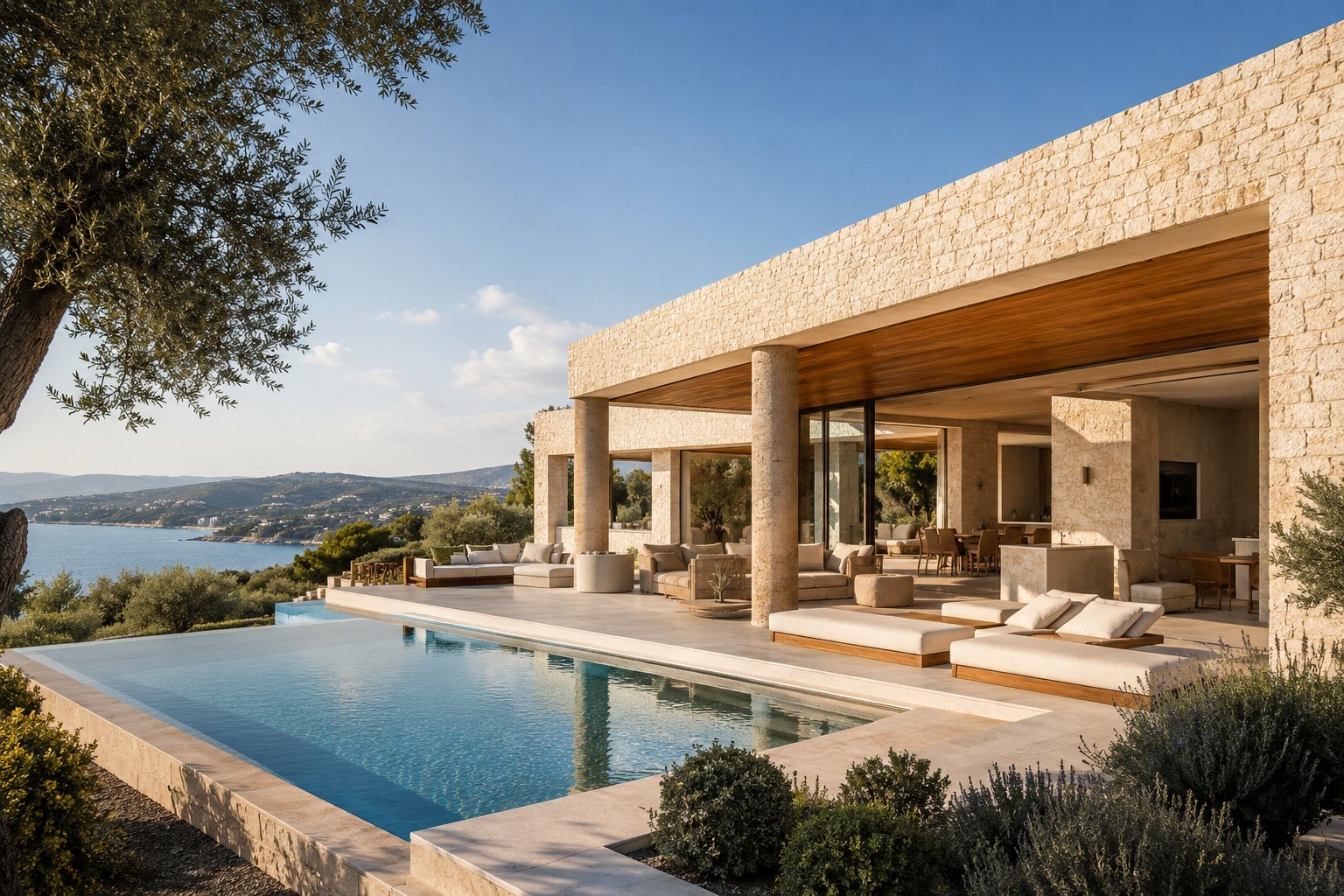
Greece is one of the last European countries where foreigners can freely purchase land and build a private home. Here is everything you need to know in 2026.
Can Foreigners Buy Land in Greece?
EU citizens have the same property rights as Greek nationals and can purchase any land without restrictions. Non-EU citizens can also buy property freely throughout most of Greece. The only exception applies to designated border zones and certain islands near national borders, where a Ministry of Defence permit is required.
Due Diligence: What to Check Before You Buy
Before any purchase, the land must be verified across four registries:
- Cadastre (Κτηματολόγιο) — confirms legal ownership and checks for mortgages or encumbrances
- Urban Planning Office — determines what can be built and the permitted building coefficient (Σ.Δ.)
- Forest Registry — confirms the land is not classified as forest (critical — forest land cannot be built on)
- Archaeological Service — checks proximity to protected monuments
Pro tip: Never skip the Forest Registry check. Forest land in Greece cannot receive a building permit regardless of what the seller claims.
Documents to Request from the Seller Before Paying a Deposit
- Title deed with unbroken ownership chain going back at least 20 years
- Cadastre certificate showing no encumbrances or disputes
- Forest Registry certificate
- Urban planning certificate confirming buildability and coefficient
- Certificate of no outstanding debts (ENFIA tax)
- Topographic survey (τοπογραφικό) prepared by a licensed surveyor
Step-by-Step Purchase Process
Step 1 — Obtain a Greek Tax Number (AFM)
Every buyer must have a Greek AFM. Apply at any tax office with your passport, or your lawyer can obtain it on your behalf. Without an AFM, no property transaction can proceed.
Step 2 — Hire an Independent Lawyer
A notary is mandatory at signing but represents neither party. Your own lawyer reviews the title chain, checks for debts, verifies permits, and represents you if you cannot attend in person. Fees: 1–2% of the purchase price.
Step 3 — Sign the Preliminary Agreement
Once due diligence is complete, a preliminary agreement is signed before a notary. A deposit of approximately 10% is paid. This agreement is legally binding — if the buyer withdraws, the deposit is forfeited; if the seller withdraws, they must return double the deposit.
Step 4 — Pay Property Transfer Tax
Transfer tax must be paid before the final deed is signed. The 2026 rate is 3.09% of the higher of the agreed price or the tax (ENFIA) value.
Step 5 — Sign the Final Deed
The final deed is signed before a notary. Legal ownership transfers to the buyer and the deed is registered with the Land Registry or Cadastre.
Golden Visa: Building Your Way to Residency
From January 2024, the minimum qualifying investment for the Greek Golden Visa is €400,000 in most regions and €800,000 in Athens, Thessaloniki, and popular islands. A completed new-build CLT villa may be used as part of a Golden Visa strategy only if the full legal, investment, use and registration requirements are met.
Important: The property must be fully constructed and registered to qualify for the Golden Visa. An indicative CLT build timeline of 4–6 months after permit approval can make this achievable in a relatively short period, subject to site, supply and approval conditions.
Cost Summary
| Cost Item | Typical Amount |
|---|---|
| Property transfer tax | 3.09% of higher of purchase price or tax value |
| Notary fees | 1–1.5% of transaction value |
| Lawyer fees | 1–2% of transaction value |
| Land registry | 0.5–0.7% of property value |
| Building permit fee | ~1% of declared construction budget |
| CLT construction (shell) | €1,800–€2,800 per m² |
| Interior finishing (premium) | €700–€1,200 per m² |
Mini Case Study: UK Buyer, Porto Heli, 2025
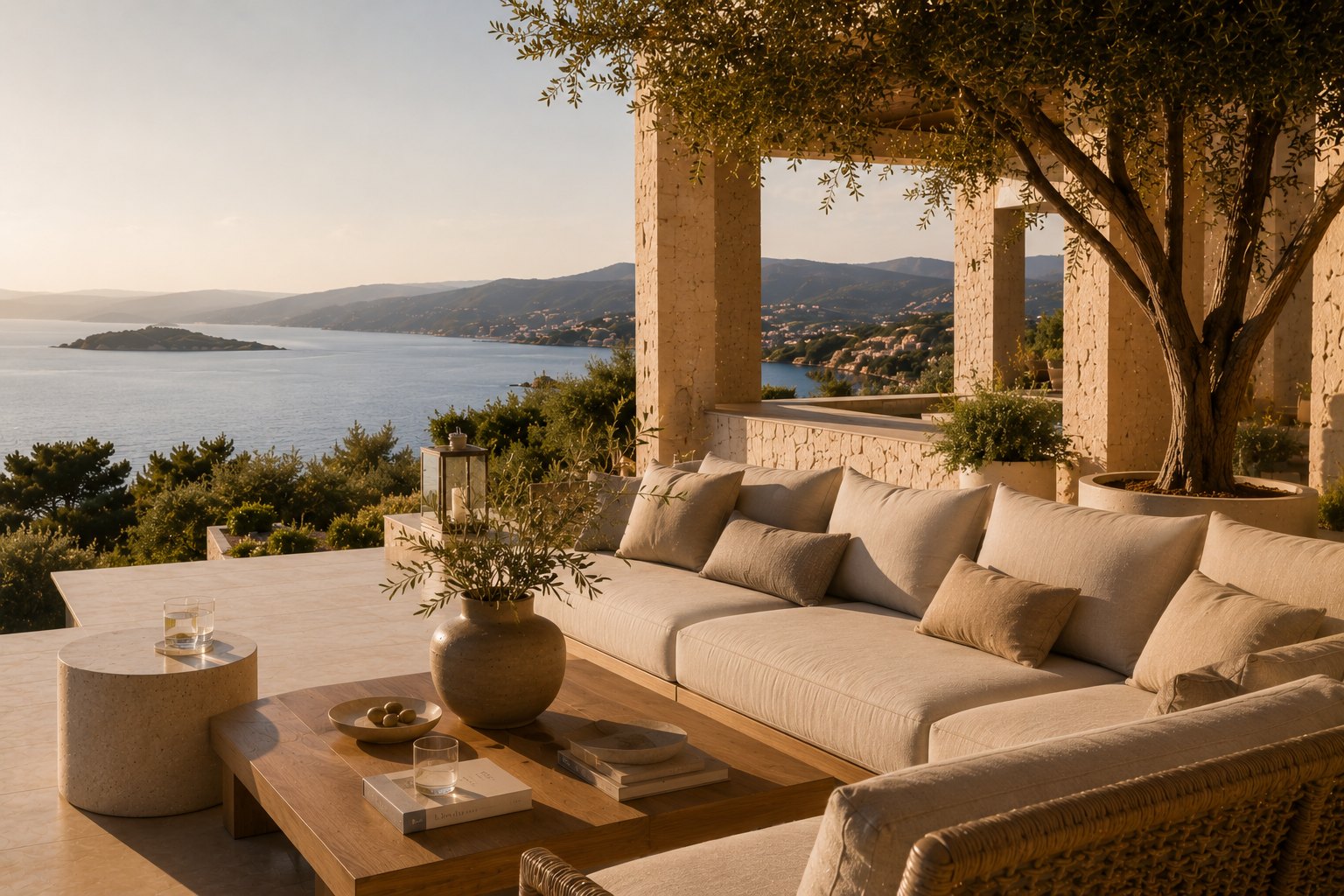
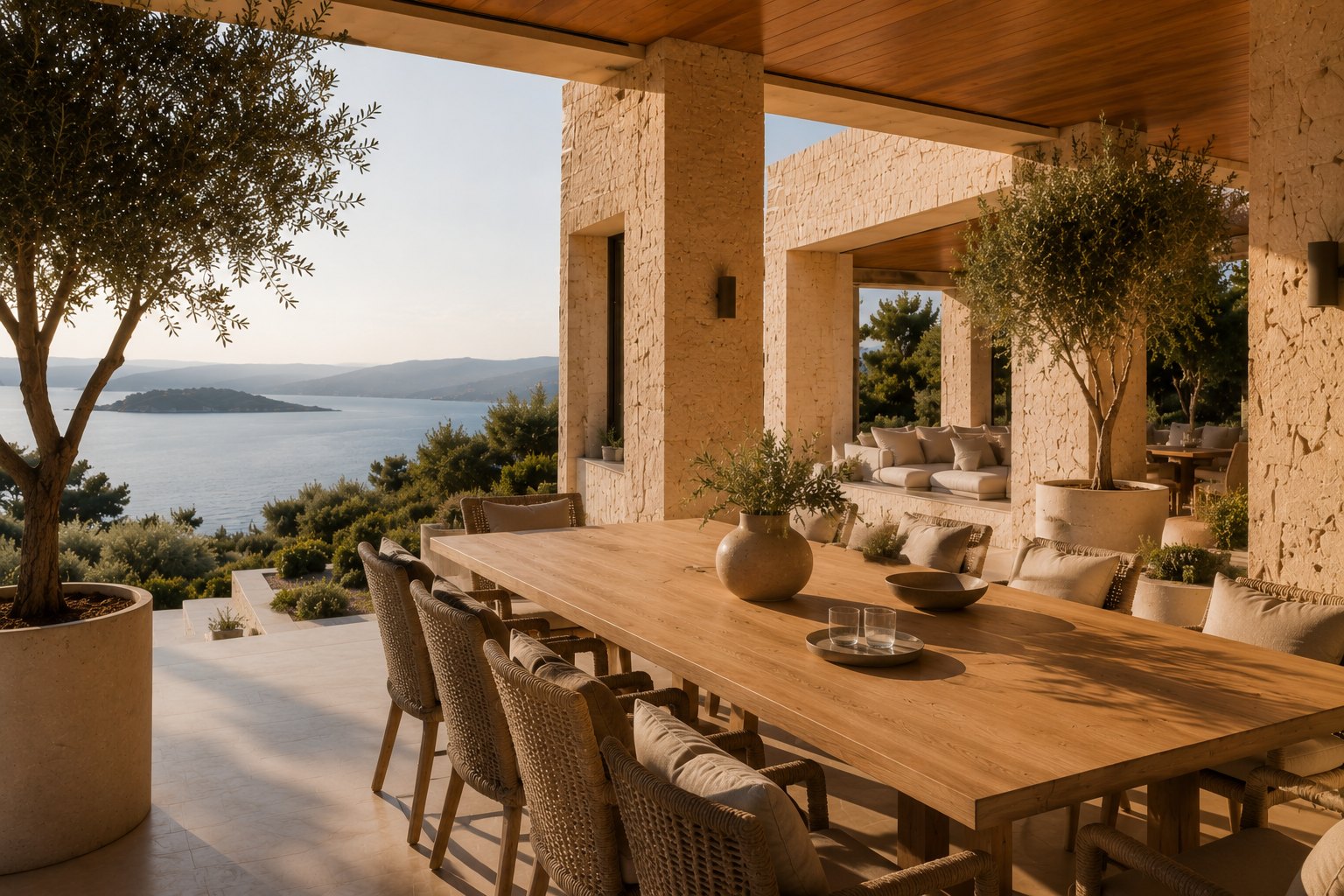
A British buyer purchased a 1,500 m² sea-view plot in Porto Heli for €195,000. Legal and tax costs added €28,000. A CLT villa of 180 m² was designed, permitted, and built in 11 months total. Construction and interior finishing came to €420,000. Pool, landscaping, and external works: €85,000. Total project cost: €728,000. The property was listed for short-term rental before the end of the first summer season. This is a rental example, not Golden Visa rental advice; if a property is acquired for Golden Visa purposes, the rental strategy must be checked separately with a Greek lawyer.
How Long Does the Full Process Take?
Indicative timing for a clean case: land purchase can take around 4–8 weeks, building permit often 2–4 months, and CLT construction usually 4–6 months after permit approval. Total timing from decision to keys can be around 9–14 months, subject to legal, planning, supply and site conditions — often faster than conventional concrete construction.
Luxury Development Greece — turnkey CLT villas in the Peloponnese. We guide you from land selection to move-in.
Part of our 4-step Greece Property Guide: 1. Buy Land → 2. Building Permits → 3. Construction Costs → 4. Rental Yield
Frequently Asked Questions
Can I buy agricultural land in Greece as a foreigner?
Yes. Agricultural land can be purchased freely. Buildability depends on zoning, road access, frontage, local planning rules and engineer verification; do not rely on plot area alone.
Do I need to be present in Greece for the purchase?
No. A lawyer holding power of attorney can represent you at every stage, including signing the final deed.
Does building a home qualify for the Golden Visa?
It can, provided the total investment reaches the applicable threshold and all current legal, registration and use requirements are met. The property must be registered as completed.