Spain closed its Golden Visa program in April 2025. Portugal removed real estate from its scheme in 2023. Greece is now the last major European Golden Visa program standing — and the most accessible entry point remaining for non-EU investors seeking EU residency through property. But not all of Greece is equal. Investment thresholds vary dramatically by location, and the region you choose determines not just the price you pay, but the lifestyle you gain. This guide makes the case that the Peloponnese — and specifically Porto Heli — is the most strategically sound choice in 2026.
What Is the Greece Golden Visa in 2026?
The Greece Golden Visa is a residence-by-investment program that grants a five-year renewable residence permit to non-EU nationals who make a qualifying investment in Greek real estate. First launched in 2013 and significantly updated in 2023–2024, the program remains one of the most flexible in Europe.
Key benefits at a glance:
- 5-year residence permit, renewable indefinitely as long as the investment is maintained
- No minimum stay requirement — you do not need to live in Greece to keep your residency
- Schengen Area travel — visa-free access across 27 European countries
- Whole family included — spouse, children under 21, and parents of both spouses qualify under the same application
- Pathway to Greek citizenship after 7 years of residency (subject to 183 days/year presence and a B1 Greek language test)
- Lowest entry cost among major European programs — following the closure of Spain’s and Portugal’s real estate routes, Greece stands alone
For high-net-worth individuals from the UK, USA, Middle East, and non-EU Europe, the Golden Visa Greece offers a compelling combination of lifestyle access, capital preservation, and a genuine EU passport pathway.
The 2026 Investment Thresholds: Where You Invest Determines What You Pay
Greece operates a tiered investment threshold system based on location. Choosing where to invest is, in effect, choosing how much you pay for the same residency outcome.
| Zone | Threshold | Key Locations |
| High-demand zones | €800,000 | Athens (Attica), Thessaloniki, Mykonos, Santorini, islands with 3,100+ residents |
| All other regions | €400,000 | Peloponnese, Epirus, Macedonia, Crete (outside major urban zones), most islands |
| Special conversions | €250,000 | Commercial-to-residential conversion, or restoration of listed/heritage buildings only |
A fourth route — new for 2026 — offers a €250,000 startup investment pathway via the Elevate Greece registry, though this is separate from the real estate route.
Property requirements across all tiers:
- Minimum property size: 120m²
- Must be a single property (not aggregated across multiple units)
- Short-term rental (Airbnb-style) is not permitted for Golden Visa properties — this restriction was introduced in 2024 and applies program-wide
The practical implication is this: investing in Athens requires €800,000. Investing in the Peloponnese — which includes some of Greece’s most desirable coastline — requires €400,000. Same permit. Same family coverage. Same citizenship pathway. Half the outlay.
Why the Peloponnese — and Why It Makes Financial Sense
The Peloponnese has long been treated as a secondary consideration in Golden Visa discussions, overshadowed by Athens and the Cyclades. That framing is now badly outdated.
The price differential is significant. At the €400,000 threshold, an investor in the Peloponnese achieves an identical residency outcome to someone spending €800,000 in Attica. The capital saved — €400,000 — can be deployed elsewhere, reinvested in the build quality of the property itself, or simply retained.
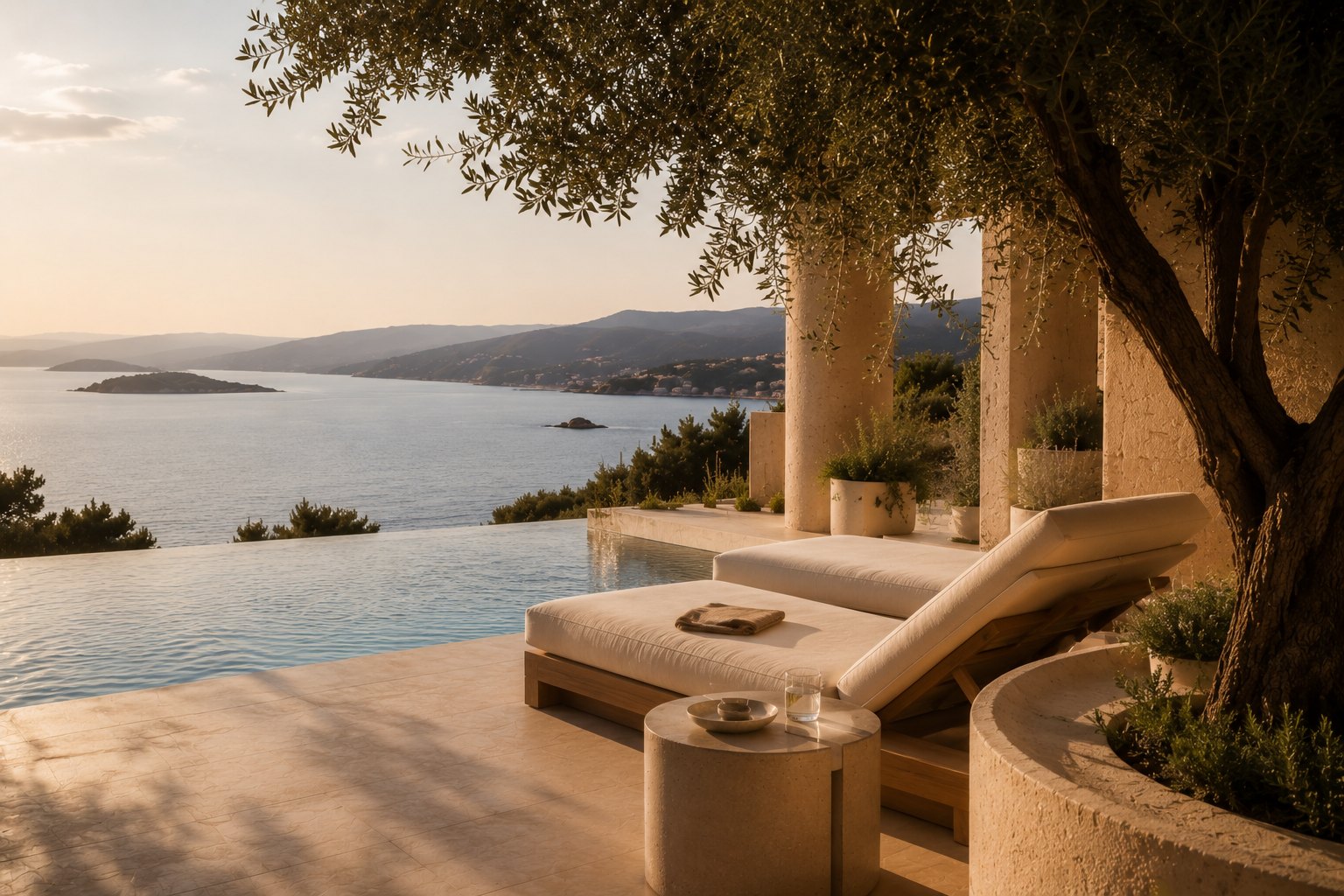
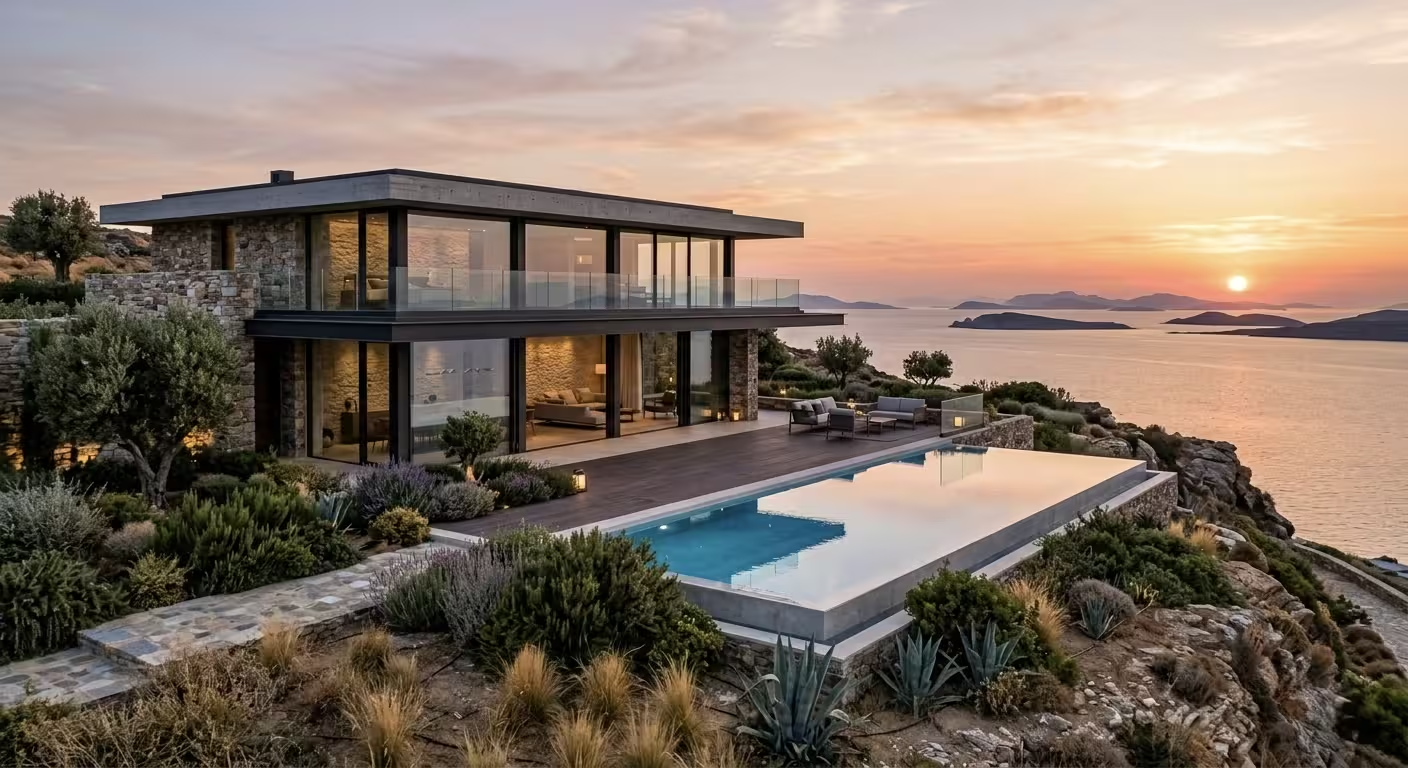
Porto Heli is the anchor of the Peloponnese luxury market. Known informally as the “Monaco of Greece,” Porto Heli sits at the southern tip of the Argolid peninsula, 15 minutes by seaplane from Athens and directly across the water from Spetses and Hydra. In 2026, residential land and property values in Porto Heli and the neighbouring Ermioni area range from €3,500 to €7,500 per square metre — the highest in the entire Peloponnese. Luxury villa transactions in the area range from €700,000 to over €2 million.
The infrastructure supporting that pricing is accelerating:
- Six Senses Porto Heli — a five-star resort opening 2026–2027
- Four Seasons — opening in the wider Porto Heli area in the same window
- Waldorf Astoria Residences — scheduled to open 2029
These are not speculative future developments. They are projects in late-stage construction by three of the world’s most recognised ultra-luxury hospitality brands. Their arrival confirms what the market has been pricing in: Porto Heli is entering a new tier.
The long-term capital performance is already established. Across the Peloponnese, property values have risen 71% over the past decade — a compounded appreciation that outperforms many comparable European coastal markets. Porto Heli, as the premium sub-market within that region, has tracked ahead of the regional average.
For the Golden Visa investor, this matters. The investment must be held to maintain residency. Holding an appreciating asset in a rising luxury market is categorically different from locking capital into a static instrument.
Build, Don’t Just Buy — The CLT Advantage in Porto Heli
Most Golden Visa guides assume the path is straightforward: find an existing property, buy it, apply. That assumption limits the investor’s options unnecessarily.
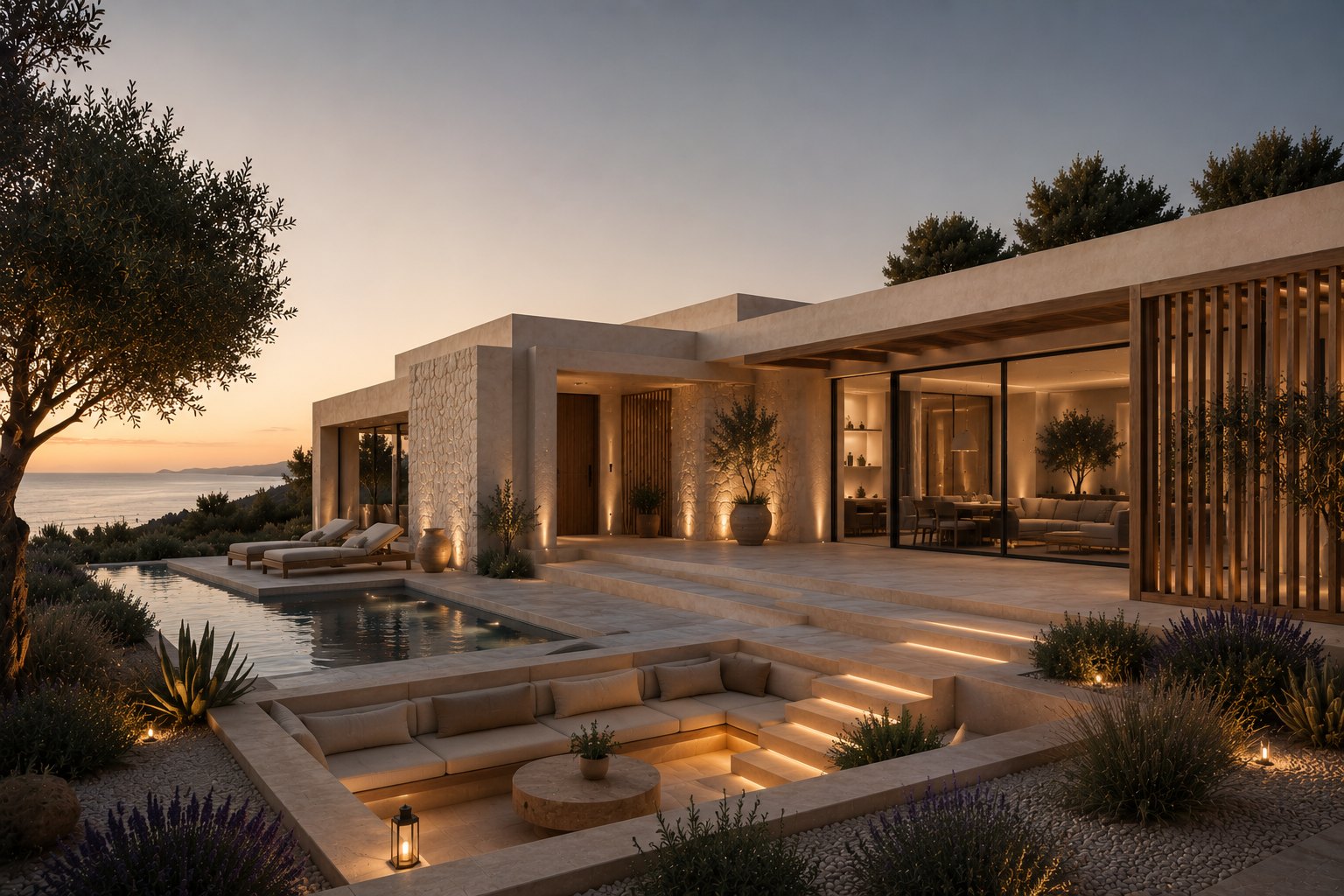
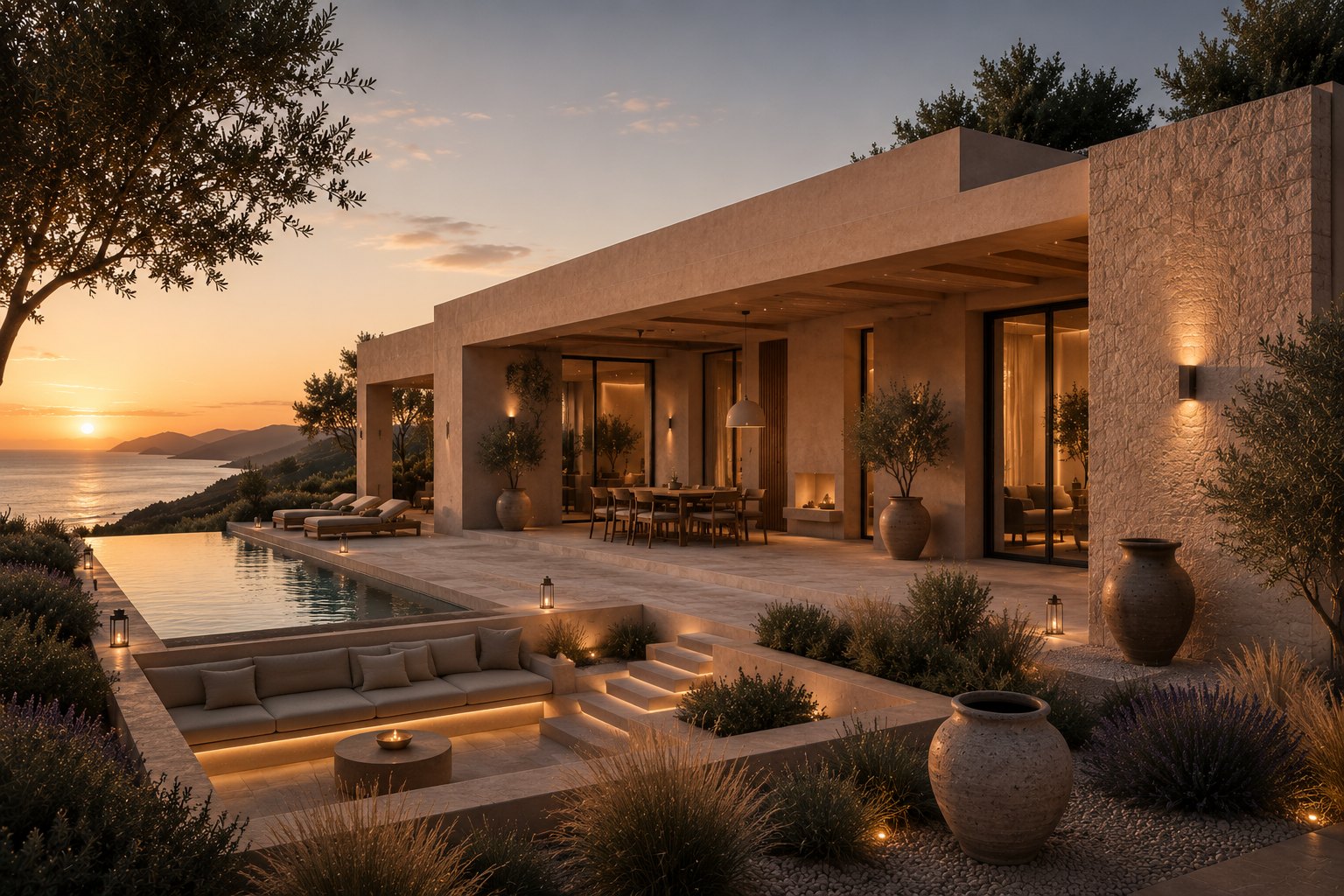
A new build qualifies for the Golden Visa Greece provided the total investment meets the applicable threshold (€400,000 in the Peloponnese) and the completed property is a minimum of 120m². This means an investor can acquire a plot, commission a bespoke villa, and use that build — rather than a pre-existing property — as the qualifying investment.
The advantages of building over buying in a market like Porto Heli are material:
- You own exactly what you designed, not what happened to be available
- Energy performance standards can be specified from the outset
- There is no premium for someone else’s renovation choices
- New builds in Greece are subject to VAT rather than property transfer tax — the cost structure differs from resale
Cross-Laminated Timber (CLT) construction introduces a further set of advantages specific to the Greek context. CLT is a precision-engineered structural timber system that is standard in Scandinavian and Alpine luxury residential construction and is now being deployed in the Peloponnese by Luxury Development Greece.
Why CLT in Porto Heli makes sense:
- A+ energy efficiency — CLT homes significantly outperform conventional masonry in thermal performance, reducing operational costs in the Greek climate
- Seismic resilience — CLT’s cross-laminated structure performs exceptionally in earthquake-prone regions; Greece sits on one of Europe’s most active seismic zones
- Eco-credentials — timber is a carbon-sequestering material; a CLT home has a materially lower embodied carbon footprint than reinforced concrete
- Build speed — from finalised design to keys, a CLT villa takes approximately 6 months — a fraction of the timeline for conventional construction
Our Homes & Solutions range starts at 120m² — the exact minimum required for Golden Visa compliance — and scales to whatever the client’s brief demands. Learn more about CLT technology and why it is suited to the Greek environment.
Luxury Development Greece operates end-to-end: plot sourcing, legal clearance, engineering, architecture, construction, and — as Step 8 of the company’s formal client process — Relocation and Residency Support, which includes guidance through the Golden Visa pathway.
The Golden Visa Application Process — Step by Step
1. Choose your investment strategy
Decide between acquiring an existing qualifying property or commissioning a new build. For Porto Heli, building is often the stronger route given the limited supply of ready-to-buy stock that meets both the 120m² threshold and the value requirement.
2. Legal setup
Obtain a Greek tax identification number (AFM) and open a Greek bank account. Both are required before any property transaction. Timeline: 3–7 working days with a local lawyer.
3. Property acquisition or build contract
Complete the property purchase or sign a build contract that documents the qualifying investment. In a new build, the total project value — land plus construction — must meet or exceed €400,000.
4. Application preparation and submission
Your legal representative compiles the full dossier: proof of investment, clean criminal record certificate, health insurance, passport copies, and application fees. The main applicant fee is €2,000; each additional family member is €150; card issuance is €16 per card.
5. Biometrics appointment in Greece
One visit to Greece is required to submit biometrics. This can be planned alongside a site visit or handover trip.
6. Residence permit issued
The residency card is issued and validity runs from the date of issuance — not the date of application. Waiting time is not lost.
Timeline: The official processing target from complete submission is 3–4 months. The realistic expectation in 2026, given the existing application backlog, is 12–16 months total. However, the backlog is improving — as of January 2026, it reached a 14-month low, and the fastest individual cases are now completing in under 30 days.
Transparency on total cost of acquisition matters. The headline investment figure is not the only number.
| Cost Item | Approximate Figure |
| Property investment (Peloponnese) | From €400,000 |
| Golden Visa application fee (main applicant) | €2,000 |
| Family member fees | €150 per person |
| Card issuance | €16 per card |
| Legal fees (lawyer) | €3,000–€8,000 (varies by firm and complexity) |
| Transaction costs (notary, land registry, taxes) | 5–8% of property value |
Note on new builds: On a new-build property, VAT replaces property transfer tax. The overall transaction cost structure for a build differs from a resale purchase and should be confirmed with a Greek tax lawyer prior to structuring the deal.
CLT construction through Luxury Development Greece is cost-competitive with traditional masonry construction when like-for-like specification is compared. The efficiency of the build process and the reduced on-site labour time typically offset the material cost differential.
Can I rent out my Golden Visa property?
Long-term rental (12-month lease agreements) is permitted and does not affect your Golden Visa status. Short-term rental — including Airbnb-style platforms — was restricted for Golden Visa properties in 2024 and is not allowed. If rental income is a priority, this should be factored into property selection strategy.
Does my family qualify under my application?
Yes. The Greece Golden Visa extends to your spouse, your children under 21, and the parents of both spouses — all under the same application and investment. Additional family members each pay the €150 fee.
Do I need to live in Greece to keep my residency?
No. There is no minimum stay requirement to maintain the residence permit. You can renew your Golden Visa Greece permit every five years without having lived in Greece, provided the qualifying investment remains in place.
Can I build a house instead of buying an existing property?
Yes. A new build qualifies for the Golden Visa provided the total investment meets the €400,000 threshold (in the Peloponnese and other non-high-demand zones) and the completed property is a minimum of 120m². The build contract and completion documentation are used as proof of investment.
How long until I can apply for Greek citizenship?
After 7 years of holding a Greek residence permit, provided you have spent at least 183 days per year in Greece and can pass a B1-level Greek language test. Citizenship confers a full EU passport.
Porto Heli Offers What Most European Markets No Longer Can
Porto Heli is one of the few places in Europe where you can still invest €400,000, secure EU residency for your whole family, and build a home that is genuinely designed for your life — not selected from a limited resale catalogue.
The combination of the €400,000 Golden Visa Greece threshold, rising luxury infrastructure, a decade of demonstrated price growth, and the ability to build a CLT villa to your exact specification makes the Peloponnese a strategically distinctive proposition in 2026.
Luxury Development Greece handles every step: from plot sourcing and legal clearance through to CLT construction and Golden Visa residency support.
Plan your CLT home in Porto Heli →
Explore our villa designs from 120m² →
Contact our Porto Heli team →